
Antler Growth Starts Now: Why Spring Feeding Deer in Alabama Matters
When most Alabama hunters think about deer season, their minds jump straight to crisp fall mornings, rut activity, and time in the stand. But the truth is, success in fall begins months earlier. Right now, during the spring, is when one of the most critical processes in a deer’s annual cycle is underway—antler growth.
Understanding what deer need during this window, and how to provide it, can be the difference between managing an average herd and growing genuinely impressive bucks on your property.
Understanding the Antler Growth Cycle
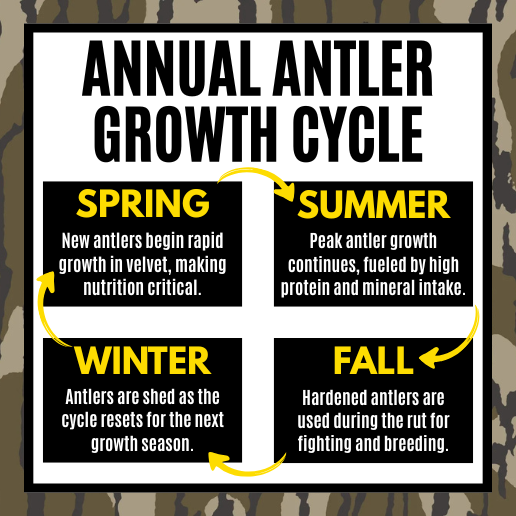
In Alabama, whitetail deer begin shedding their antlers in late winter, typically between January and March. Almost immediately after shedding, bucks enter a rapid regrowth phase. By early spring, new antlers are already forming under a soft, nutrient-rich layer of tissue called velvet.
During this velvet stage, antlers are not yet hardened bone—they are living tissue filled with blood vessels. This means any nutritional deficiencies during spring can directly impact antler size, mass, and even symmetry later in the year.
Antlers are one of the fastest-growing tissues in the animal kingdom, with some bucks capable of growing up to an inch per day under optimal conditions. But that kind of growth doesn’t happen without the right nutrition. Antlers are composed primarily of calcium and phosphorus, along with significant protein requirements. Without access to these key nutrients, bucks simply cannot reach their genetic potential. While genetics determine how big a buck can grow, nutrition determines how close he gets.
Why Spring Nutrition Matters Most

Spring is a time of transition across Alabama. Native vegetation is greening up, but it is not always enough—especially in areas with poor soil quality or high deer populations. In many parts of the state, soil lacks the natural mineral content needed to support maximum antler development through forage alone.
At the same time, bucks are recovering from the physical stress of winter and the rut, often entering spring in a depleted condition just as antler growth begins. Does are also pregnant or nursing, placing additional nutritional demands on the herd.
One of the biggest misconceptions among hunters is that deer can catch up nutritionally later in the summer. In reality, peak antler growth occurs from late spring into early summer, meaning missed nutrition during this window cannot be recovered. Without a spring feeding program, deer are forced to compete for limited natural resources. This can result in reduced antler growth, lower body weights, and increased stress across the herd.
Protein: The Building Block of Bigger Antlers

If there is one nutrient that stands out during spring, it’s protein. For optimal antler growth, bucks require a diet containing at least 16 to 20 percent protein. Natural browse in Alabama often falls short of that threshold, particularly early in the season.
This is where supplemental feeding becomes critical. Products like the Whitetail Institute 30-06 Mineral/Vitamin Supplement and high-protein feeds are specifically formulated to close the nutritional gap that natural forage leaves behind during this critical growth window.
Providing reliable protein sources ensures bucks have the building blocks needed to maximize growth when it matters most.
Minerals: The Hidden Key to Growth
While protein fuels growth, minerals form the structural foundation of antlers. Calcium and phosphorus are essential, but trace minerals like zinc and magnesium also play important roles in development. In mineral-deficient regions common throughout Alabama, these nutrients must be supplemented.
Mineral products like Lucky Buck Deer Mineral Supplement give deer access to what they cannot consistently find in native soil. Spring is the ideal time to establish or refresh mineral sites, as deer actively seek out these nutrients during peak growth.
Attractants vs. Nutrition: What’s the Difference?

It is important to understand that not all deer feed products serve the same purpose. Attractants such as roasted corn blends, peanut-based feeds, and flavored granular options are designed to draw deer into a specific area using scent and taste. Products like Roasted Maxx and Moultrie attractants are excellent for pulling deer into shooting lanes or camera locations. However, attractants alone don’t always provide the full nutritional profile needed for antler growth.
A successful spring feeding strategy combines all three elements:
- Protein-rich feeds to support growth
- Mineral supplements to build structure
- Attractants to increase consistency and traffic
Together, these create a system that not only feeds deer but keeps them coming back.
Where You Put Feed Matters Just as Much as What You Put Out
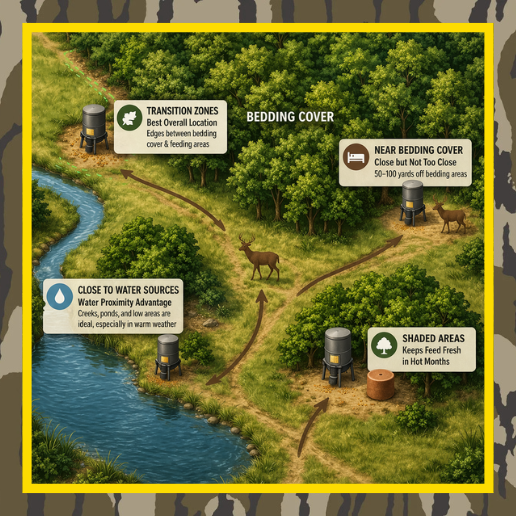
Providing high-quality nutrition is only half the equation. Strategic placement plays a major role in how often deer use your property and whether they stay there.
Spring Movement Is More Predictable
After the rut, Alabama whitetails shift into smaller, more consistent core areas. Movement becomes more food-driven and less erratic, with many deer spending most of their time within a few hundred acres. When a dependable food source is available, deer are far more likely to stay within that range rather than expanding outward. This gives landowners a unique opportunity to establish long-term patterns before hunting season ever begins.
Transition Zones
Edges between bedding cover and feeding areas—like timber lines or thicket borders—are ideal. Deer naturally travel these routes daily and feel secure using them.
Near Bedding Cover
Position feed about 50 to 100 yards off bedding areas. This allows deer to stage and feed comfortably without feeling pressured.
Close to Water Sources
Creeks, ponds, and low areas are excellent locations, especially as Alabama temperatures rise. Deer often eat, drink, and bed within tight, predictable loops.
Shaded Areas
Placing feed in shaded spots helps preserve it longer and aligns with deer preference for cooler areas during warmer months.
Where NOT to Place Feed
Avoid these common placement mistakes:
- Wide open areas with no cover nearby
- Locations near heavy human activity
- Directly on property lines — this can pull deer off your land just as summer patterns begin to form
Instead of relying on a single feeding site, consider multiple locations spaced 100 to 300 yards apart. This reduces competition, supports more deer, and encourages natural movement patterns across your property.
Turning Nutrition Into Opportunity

In spring, bucks begin settling into core areas and establishing consistent routines. When your property provides reliable food, water, and security, deer begin to associate it with safety and stability. Deer are creatures of habit—when they find consistent nutrition in a low-pressure environment, they are far more likely to stay, and those patterns often carry into hunting season.
Place feed and mineral sites in low-pressure areas near where you plan to hunt in the fall. The patterns bucks establish now while undisturbed are the same ones they’ll follow when the season opens.
In Alabama, antler growth does not start in the fall—it starts now. Spring is your window of opportunity to influence the size, health, and quality of the bucks on your property. By providing the right nutrition and placing it strategically, you are making an investment that pays off every opening day.
Start Your Spring Feeding Program Today
If you are serious about growing bigger bucks in Alabama, don’t wait until opening day. Stop by your local H&H Truck and Outdoor or shop our full selection of deer feed, minerals, and attractants online.
Shop Deer Feed & SupplementsFAQs About Deer Antler Growth in Alabama
When does antler growth start for whitetail deer in Alabama?
Antler growth in Alabama begins almost immediately after bucks shed their previous set, which typically happens between January and March. By early spring, new antlers are already forming under velvet—living tissue packed with blood vessels that is highly sensitive to nutritional deficiencies.
What nutrients do deer need for maximum antler growth?
Antler development depends on three primary nutritional pillars: protein, calcium, and phosphorus. Bucks need a diet of at least 16 to 20 percent protein during the velvet stage to support rapid tissue growth. Calcium and phosphorus form the structural foundation of hardened antlers, and trace minerals like zinc and magnesium also play important supporting roles.
Can deer catch up on nutrition later in the summer if they miss spring feeding?
No—this is one of the most common misconceptions among Alabama hunters. Peak antler growth occurs from late spring into early summer, and that window cannot be recovered once it passes. Nutritional deficiencies during the velvet stage directly limit how large a buck’s antlers can grow that year, regardless of what he eats afterward.
What is the difference between a deer attractant and a nutritional supplement?
Attractants like roasted corn, peanut-based blends, and flavored granular products are designed primarily to draw deer into a specific area using scent and taste appeal. Nutritional supplements and protein feeds, on the other hand, are formulated to meet a deer’s dietary requirements for growth and body condition. A complete spring program uses both in combination.
Where is the best place to put deer feed and mineral sites on a property?
The most effective locations are transition zones between bedding cover and feeding areas, such as timber lines or thicket edges, where deer already travel naturally and feel secure. Placing feed 50 to 100 yards off bedding areas allows deer to stage and feed comfortably. Avoid wide open areas, locations near heavy human activity, and spots directly on property lines.
How many feeding sites should I set up, and how far apart should they be?
Rather than relying on a single location, setting up multiple feeding sites spaced 100 to 300 yards apart is a more effective approach. This reduces competition among deer, supports a larger portion of your herd simultaneously, and encourages natural movement patterns across your property.
Do does benefit from spring feeding programs, or is it just for bucks?
Both bucks and does benefit significantly from spring supplemental feeding. Does are either pregnant or actively nursing fawns during this period, placing heavy nutritional demands on their bodies at the same time bucks are in peak antler growth. A strong spring feeding program supports the overall health and productivity of your entire herd.
When should I set up mineral sites for deer in Alabama?
Spring is the ideal time to establish or refresh mineral sites because deer are actively seeking calcium, phosphorus, and trace minerals to support antler development and recovery from winter stress. Setting up mineral sites early—before peak velvet growth begins—ensures deer have consistent access throughout the most critical window of the year.
How does spring feeding affect deer patterns during hunting season?
Deer are creatures of habit, and patterns formed in spring often carry into fall. When a property consistently provides reliable food, water, and low hunting pressure during the off-season, deer begin to associate it with safety and stability. Bucks that establish core areas on your property in spring are far more likely to be there when the season opens.
What products does H&H Truck & Outdoor carry for spring deer feeding?
H&H Truck & Outdoor carries a full selection of spring feeding products including Imperial Whitetail 30-06 nutritional supplement, high-protein deer feeds, Lucky Buck Deer Mineral Supplement, and a variety of attractants. Visit your local store or browse online to find the right combination for your property and herd goals.